
A huge thank you to Irissol for sharing her story with us today. You have given us a beautiful gift during this MICA month.
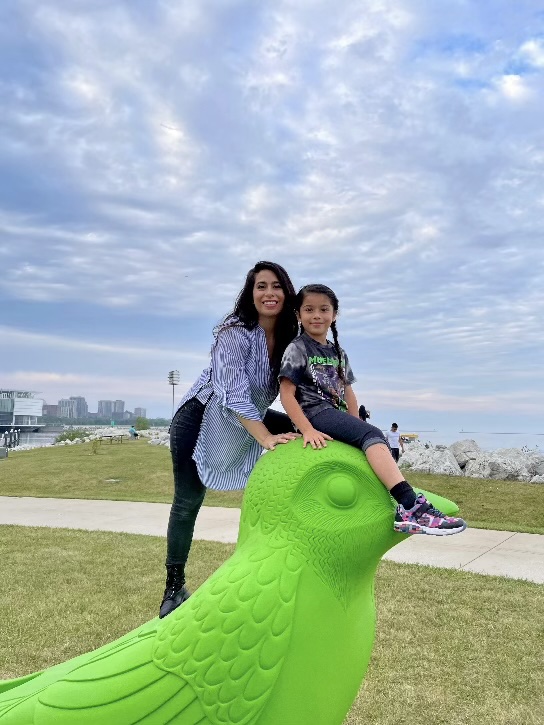
Ten years into my recovery, I’ve learned: never stop advocating for yourself, always make body-based decisions and we can do hard things.
After laboring 37 hours with my first born (5-7 hours in stirrups) and experiencing several falls at the hospital after giving birth, I was discharged with a beautiful baby girl, one functioning leg, a walker, and a femoral nerve injury diagnosis, which would keep me from walking unassisted for months. It would take another 7 years for my OB-GYN to diagnose me with pudendal nerve damage as well, also caused by that first delivery, made evident only by the lingering pain in my inner thigh and my insistence to the doctor that something had been missed.
Today, as a mom of two, I am active and light but still need to focus on strength and mobility to keep pain at bay. Exercise has been central to my recovery, offering not only physical restoration but also giving this busy mom a reason to pause and focus on my wellbeing. The challenge is that maternal nerve damage is unexplored territory for many fitness experts, so when they ask you to stretch, leap and push, they often do so with little to no understanding of how the movements will affect your muscles and nerves.
Over the years, I’ve tried numerous programs; some offered building blocks, others caused me pain and just a few brought relief. In the end, there’s no one-size-fits-all for our community. I’ve had to tune into my body and test what feels good for my unique nerve damage. Specifically, my body has favored Pilates inspired routines that prioritize slow, controlled movements, and get laser-focused on all the major muscle groups while engaging all the tiny supporting muscles.
Oppositional movements have also been incredibly grounding for me. For example, when I get on all fours (quadruped), extending my left arm out and reaching my right leg long, I connect into my core, which signals to my body that it’s secure, stable and ready for more movement. The way I see it is that the nerve damage threw me off kilter, requiring my body to spend a little more time rebalancing and anchoring the midline (the spine, the center of the body). So, I choose full-body workouts that encourage balance, core and spine strength, lengthening and stability. This approach allows me to rebuild a strong foundation for my leg to stand on.
Conversely, HITT routines, for example, can put too much strain and overload on my already damaged nerves, which for me, has led to excessive pain and at one point, to nerve regression. One of the scariest things to know is just how thin the line between mobility and immobility has become for me. Thankfully the team at Nerve Damage from Childbirth reminded me that it’s natural to feel scared but your body has recovered before, and it can do it again. I often think of their sage advice whenever I feel a twinge in my leg or sudden imbalance in my stance, and it brings me calm.
For some, recovery from maternal nerve injury is quick. For me, my recovery journey will be lifelong and I’m ok with that. It pushes me to always stay connected into my body, to honor what it needs and to be grateful for how it moves. And, in some ways, that feels like a gift. Whether your recovery is swift, lengthy or somewhere in between, I hope you’re able to tune in to your personal needs and meet yourself where you are, quite literally one step at a time.
 Nerve Damage from Childbirth